P/E Ratio Explained: How Smart Investors Actually Use It
Introduction
Most investors think they’re making smart decisions because they look at one number — the P/E ratio.
But here’s the uncomfortable reality:
Using P/E without context is one of the fastest ways to make bad investments.
If you don’t understand what P/E really tells you, you’re not analyzing—you’re guessing.
What is P/E Ratio?
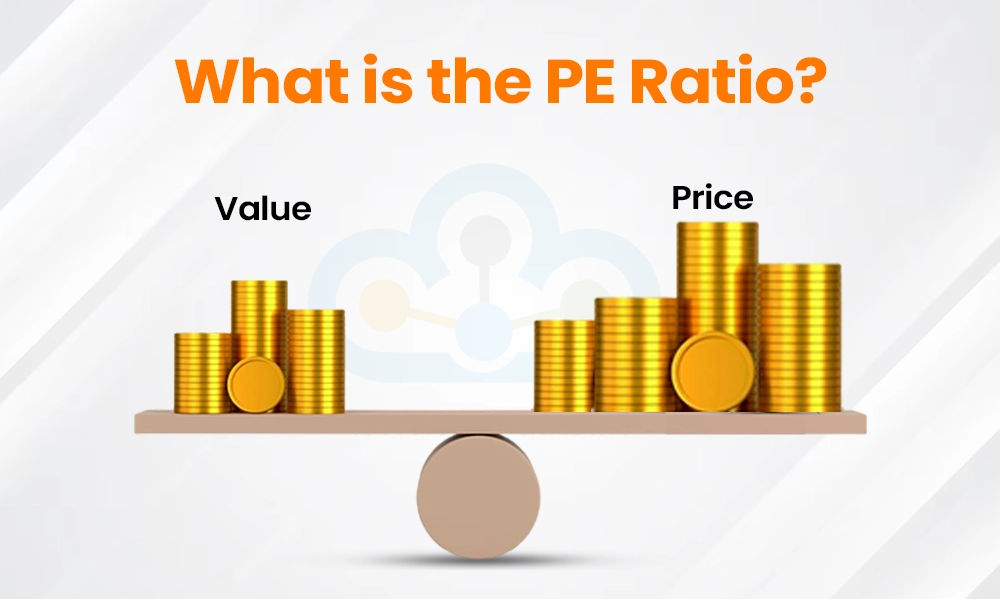
P/E (Price-to-Earnings) ratio tells you:
👉 How much you are paying for ₹1 of a company’s earnings
Formula:
P/E Ratio = Market Price per Share ÷ Earnings per Share (EPS)
Why P/E Ratio Matters
1. Helps You Judge Valuation
A lower P/E may indicate a stock is undervalued.
A higher P/E may indicate it’s expensive—or expected to grow.
Example 1:
Stock A price = ₹200
EPS = ₹20
P/E = 10 → You pay ₹10 for ₹1 earnings
Example 2:
Stock B price = ₹200
EPS = ₹5
P/E = 40 → You pay ₹40 for ₹1 earnings
2. Shows Market Expectations
P/E is not just about price—it reflects future expectations.
Example 1:
High P/E → Market expects strong growth
Example 2:
Low P/E → Market expects slow growth or risk
3. Useful for Comparing Stocks
P/E works best when comparing companies in the same sector.
Example 1:
Two banks → compare P/E to see which is reasonably priced
Example 2:
Comparing IT vs FMCG using P/E → meaningless
Where Investors Go Wrong
1. Assuming Low P/E = Cheap
This is lazy thinking.
Example 1:
Company has low P/E because profits are falling
Example 2:
Weak business → market doesn’t trust future earnings
2. Ignoring Growth
High P/E doesn’t always mean overvalued.
Example 1:
Fast-growing company → high P/E justified
Example 2:
Market pays premium for consistent growth
3. Ignoring Earnings Quality
P/E is only as good as the earnings.
Example 1:
One-time profit boosts EPS → P/E looks low (misleading)
Example 2:
Unstable earnings → unreliable P/E
P/E Ratio vs Reality
Low P/E = Could be undervalued OR weak business
High P/E = Could be overvalued OR high-growth company
Hard Truth:
P/E alone cannot tell you what to buy.
Smart Way to Use P/E
At AlphaNifty, we don’t blindly follow P/E.
We combine it with:
✔ Growth rate (earnings trend)
✔ Industry comparison
✔ Debt levels
✔ Business quality
Example: Good vs Bad Use of P/E
Bad Use:
“P/E is low → buy immediately”
Good Use:
“P/E is low → check why → analyze business → then decide”
Final Thoughts
P/E ratio is one of the most powerful tools—but also one of the most misused.
If you rely on it blindly, it will mislead you.
If you use it correctly, it can guide you.
Call to Action
Stop investing based on half knowledge.
📲 Connect with AlphaNifty
📊 Get research-backed stock and fund insights
🚀 Build a portfolio with clarity and confidence
AlphaNifty – Smart Investing Made Simple


Comments
Post a Comment